
 |
|---|
| Daily Mail |

|
BioLab fire exposed chemical risks. Now some federal safety rules could be rolled back
WSB-TV
November 12, 2026
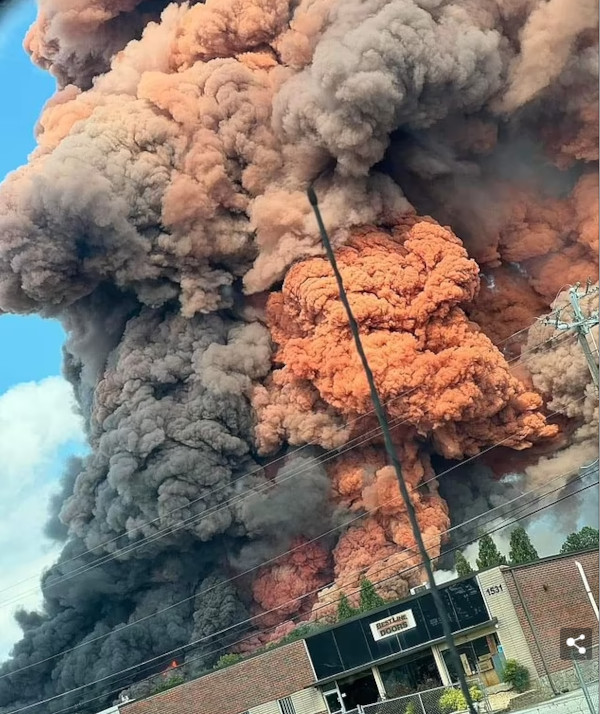
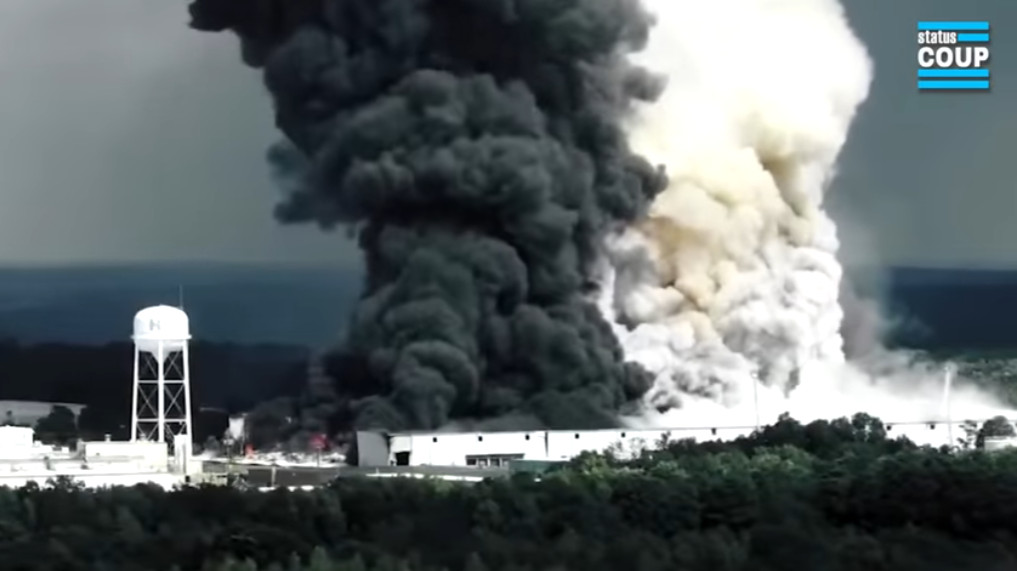
ROCKDALE COUNTY, GA — Two years after the 2024 BioLab fire, proposed changes from the Environmental Protection Agency could make it harder for people to learn about potential accidents at chemical facilities near their homes.
Channel 2’s Michael Doudna investigated the proposed rule changes and what they could mean for hundreds of thousands of Georgians who live or work near large chemical facilities.
Across the road from BioLab in Rockdale County, signs of the fire remain at a worksite owned by Chris Lovejoy, where chemical-laced smoke forced him and his team to abandon the property.
“You’ve got color changes going on,” Lovejoy said, pointing to discoloration on the building’s siding.
Video shows smoke settling on his property and fading the paint where it made contact.
What Lovejoy can’t see is what impact that exposure may have had on him and his employees.
“I guess we’re just guinea pigs and they’ll see what happens,” Lovejoy said.
Lovejoy said some of his employees have already sought treatment and undergone surgeries for health problems they believe are connected to the smoke.
“You just keep doing it,” Lovejoy said. “Go to the doctor and let him keep taking chest x-rays, knowing that one of these times you’re probably going to walk in there and go alright, we’ve got a problem.”
For Lovejoy and others who lived or worked near the fire, questions remain about what they were exposed to and what the long-term health effects could be.
Greg Huey, a Georgia Tech professor who researches airborne chemicals, and his team released new findings this year about the chemicals involved in the accident.
“A lot of people ask me after the BioLab incident, what are the health impacts?” Huey said. “We don’t expose people to levels of halogens and do the tests, so it’s almost impossible to know.”
His team’s research estimated that BioLab stored the equivalent of roughly 45 tankers of chlorine.
After the accident, investigators with the U.S. Chemical Safety and Hazard Investigation Board found that the site had nearly twice the amount of reactive material it had reported to Rockdale County for permitting purposes.
The Chemical Safety Board also found that the reactive chemicals stored at BioLab were not covered by federal rules requiring large chemical inventories to have risk management plans.
Those plans can help local communities and emergency officials understand what a potential worst-case accident could look like.
In its report, the Chemical Safety Board recommended expanding the rules to include planning requirements for facilities such as BioLab.
But in February, the EPA proposed regulatory changes that would prevent some safety requirements approved under the Biden administration from taking effect next year.
The proposal would eliminate an option for residents to directly request detailed risk management information from nearby facilities. It would also pull back plans requiring facilities to invest in safer technology for storing chemicals and could unwind requirements for independent third-party audits.
“Rolling back the rule changes is absurd in this situation,” attorney Alan Holcomb said.
Holcomb represents two Rockdale County sheriff’s deputies who rushed toward the BioLab fire without knowing what was in the smoke.
“Our clients didn’t know what was in the smoke,” Holcomb said. “They didn’t know how bad it was.”
Holcomb said his clients were not given respiratory protection and have lost 40% to 50% of their lung function since the fire.
Now, he worries about what relaxing the rules could mean during future chemical emergencies.
“We’re going to go back to a little bit of the Wild West where these companies can kind of do whatever they want internally,” Holcomb said.
BioLab is not the only facility where a major accident could put a large number of people at risk.
Channel 2 Action News Investigates went to a secure EPA reading room and reviewed plans detailing worst-case scenarios for the 20 largest chemical storage sites in metro Atlanta.
Those risk management plans show at least 880,000 people live or work within potential danger zones in the event of severe chemical accidents.
“It’s a rabbit hole you don’t really want to go down, but it’s a scary thought,” Lovejoy said.
Channel 2 Action News Investigates reached out to both the EPA and BioLab’s parent company for comment. Neither responded to a request for comment before this story’s deadline on Nov. 10, 2026.
After broadcast, an EPA spokesperson said in a statement that the proposed changes “seek to improve the chemical safety process by avoiding duplicative requirements.”
According to the EPA’s statement, the changes would also adjust the risk management plan program to follow separate safety standards used by OSHA. The changes would also eliminate “unnecessary burdens placed on facilities where there is not specific data available to show that the current RMP standards would reduce or have reduced the number of accidental releases.”
The public comment period for the proposed rule closed in May. Now, the EPA is considering the responses received before revising and publishing the final rule.
Detailed information about accident management plans at facilities near the public is currently restricted. The EPA offers a separate tool, the Vulnerable Zone Indicator System, that allows people to check whether their homes are within the boundaries of a potential danger zone.
“If I were living near one of these again, I’d be trying to figure out how to sell my house,” Lovejoy said.
 Share your thoughts in the Forum